Cooling Units for Water Dispensers
and Drinking Water Coolers
Cooling engineered around your water dispenser
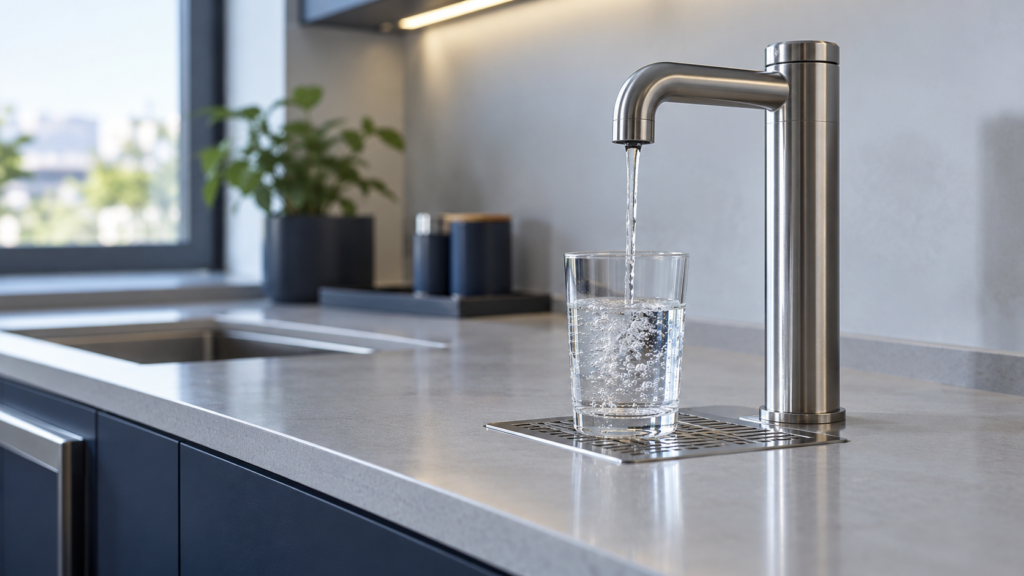
A water dispenser is judged at its busiest moment: the queue at the office tap at lunchtime, or the refill point after a training session. Whether the water is still cold at the end of that queue depends on the cooling unit.
Van West Cooling develops and manufactures compact R290 cooling units for OEM manufacturers of mains-fed water dispensers, drinking water fountains and chilled or sparkling water taps. We engineer systems at capacities tailored to the dispenser design and build them for repeatable series production at our facility in the Netherlands. We start with your dispenser's draw-off profile, available space and target water temperature—not a standard cooling unit that the housing has to accommodate.
What the cooling unit has to deliver
The cooling unit shapes more of your product than its water temperature. When we size it, we look at:
- Draw-off profile: how much cold water is taken over a day, and how much in the busiest 15 to 60 minutes.
- Water temperatures: the mains water inlet temperature in summer and the target temperature at the tap.
- Ambient conditions: the warmest room or cabinet the dispenser will stand in, and how the condenser gets fresh air.
- Noise: dispensers stand in offices, receptions, canteens and restaurants, close to people.
- Space and integration: the available envelope, the airflow path and other heat sources in the housing, such as a hot water tank.
- Still, sparkling or both: carbonation adds its own requirements (see below).
Three cooling principles for water dispensers
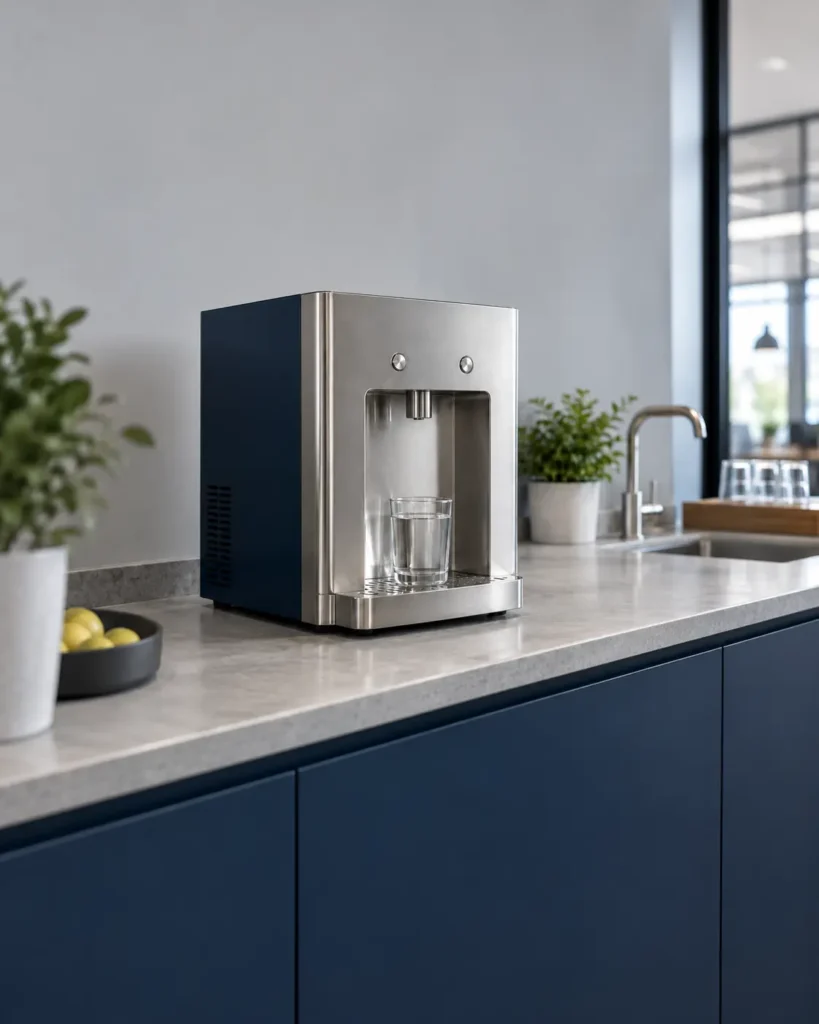
Ice bank (cold water bath)
During quiet periods, the refrigeration circuit builds up ice around an evaporator in a water bath. Drinking water runs through a coil in the bath and is cooled on its way to the tap. The ice works as a cold reserve, so a relatively small compressor can cover high peaks. The trade-off is a larger unit and time to rebuild the ice reserve after installation or a long rush.
Direct-cooled tank
The refrigeration circuit cools a reservoir of drinking water. The tank provides a defined reserve of cold water for dispensing; its volume, hygiene requirements and recovery time must be accounted for. Once the stored cold-water reserve has been drawn down, the available refrigeration capacity determines how quickly the system recovers.
Flow-through cooling
Water is cooled while it flows through a heat exchanger, so little cold water is stored. The cooling capacity then has to match the peak flow more directly.
| Feature | Ice bank | Direct-cooled tank | Flow-through |
|---|---|---|---|
| How peaks are covered | Stored ice | Stored cold water | Cooling capacity |
| Stored cold water | Small (water runs through a coil) | Tank volume | Little |
| Main trade-off | Size and recovery time | Limited cold volume | Capacity sized on peak flow |
Which principle fits depends on your draw-off profile, space and noise targets. We make that choice with you at the start of the project and confirm it in prototype tests inside your product.
Sparkling water: cooling and carbonation work together
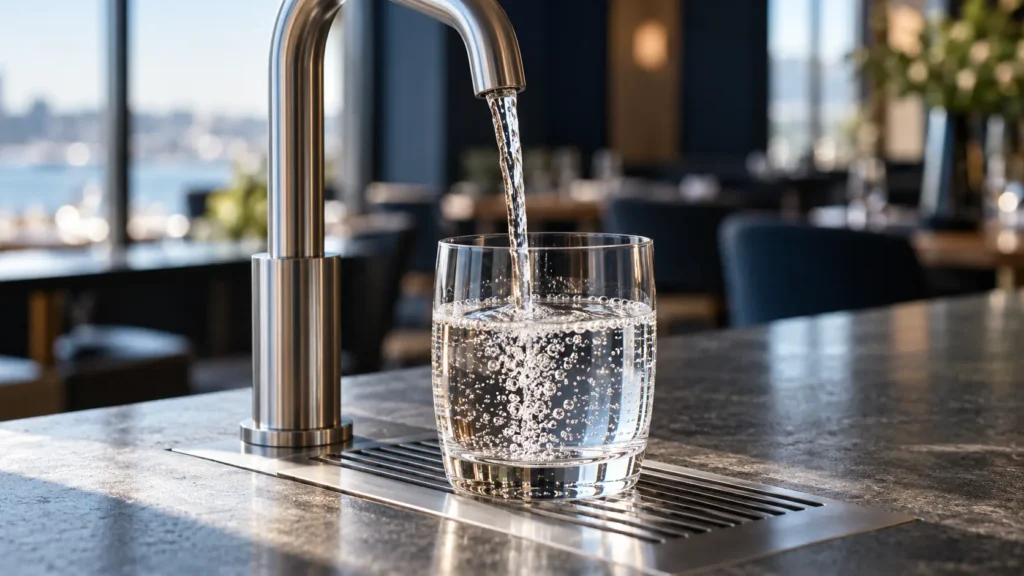
CO2 dissolves considerably better in cold water than in warm water. In a sparkling water dispenser, the cooling unit therefore also affects how well carbonation works. The position of the carbonator relative to the cold zone, the heat added by the water pump and the temperature of the water entering the carbonator are part of the cooling design, not details to solve afterwards. If your product also delivers hot water, the layout has to keep heat from the hot section away from the cold side.
Refrigerant: why R290
The EU F-gas Regulation (EU) 2024/573 sets different restrictions for different refrigeration categories. Annex IV, point 4, has restricted placing self-contained refrigeration equipment other than chillers on the EU market with F-gases of GWP 150 or more since 1 January 2025, unless their use is required to meet safety requirements at the site of operation. Specific temporary exemptions have also existed for certain product categories. A chiller is defined by its primary function of cooling a heat-transfer fluid; whether a particular dispenser or integrated module falls into that category cannot be decided solely from the fact that it cools water. Have the complete product and intended application classified before applying a deadline. For the separate chiller rules, see R290 chillers for OEM equipment.
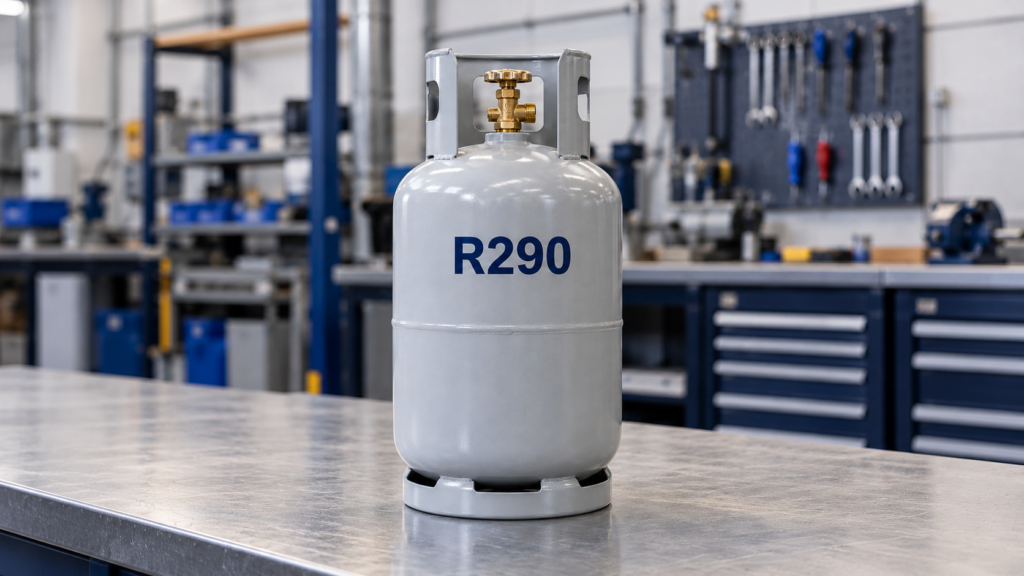
R290 (propane) is a non-fluorinated refrigerant with a 100-year GWP of 0.02 under the EU calculation method (European Commission). It is flammable (A3), so refrigerant charge, component layout, ventilation, ignition-source control and the safety assessment must be considered together. The applicable product standards depend on the finished dispenser and its functions. In addition to refrigeration safety requirements, IEC 60335-2-75 addresses certain commercial dispensing appliances, while IEC 60335-2-89 covers commercial refrigeration appliances; the correct applicability and relevant EN adoption must be established per design (IEC). See Quality & Certifications for our general compliance approach.

Drinking water hygiene: new EU rules from 31 December 2026
New harmonised EU hygiene requirements for certain materials and products in contact with drinking water start applying on 31 December 2026 under the Drinking Water Directive (EU) 2020/2184 and related acts. The conformity-assessment framework in Delegated Regulation (EU) 2024/370 has a transition to 31 December 2032 only for products that satisfy the specified national hygiene requirements and have a national conformity certificate still valid on 31 December 2026. This is not a general extension for all existing drinking water equipment.
The scope of the new rules must be assessed for the individual water-contact materials, components and their intended installation; it should not be assumed that every part of a complete dispenser automatically falls under Article 11. Agree the applicable drinking-water, food-contact and product-safety requirements with your compliance specialist and component suppliers early in development. We can take the physical integration of the water path into account when designing the cooling assembly.
The Directive also calls on EU Member States to improve access to drinking water, including public drinking-water points where technically feasible (Article 16).
From requirements to series production
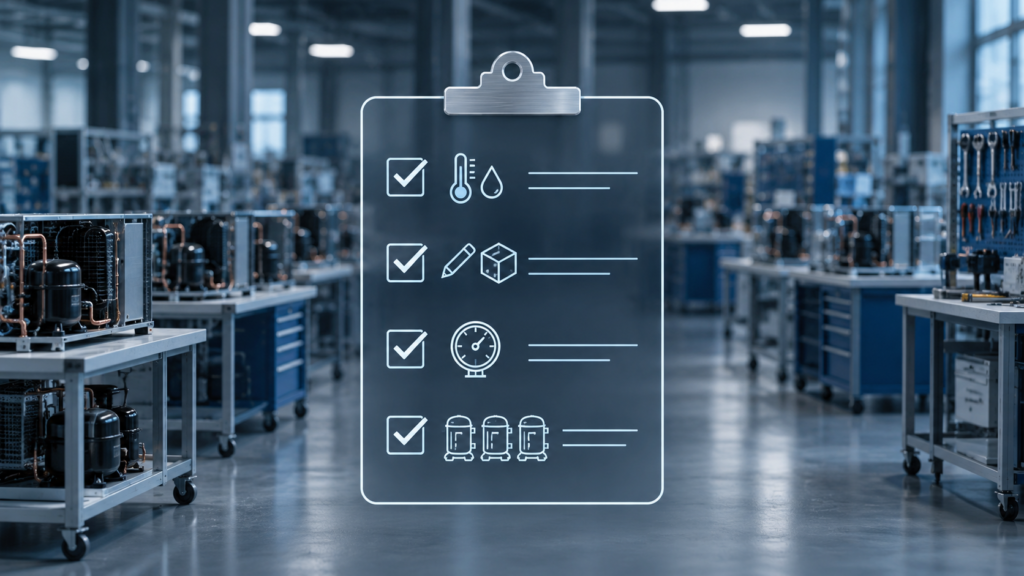
- Requirements: draw-off profile, water temperatures, ambient conditions, still, sparkling or hot water, available space, noise target, power supply and expected annual volume.
- Design: thermal design and R290 component selection, mechanical and 3D design, integration into your housing and design for manufacturability.
- Prototypes and validation: performance and capacity, leak and pressure, noise and vibration, and system balance, tested on their own and inside your dispenser. Only after successful validation is the design released for series production.
- Series production: automated refrigerant charging, end-of-line testing and full traceability for every unit, in our own facility in the Netherlands. Read more about our production process.
Frequently asked questions
Ice bank or direct cooling: which is better for a water dispenser?
Neither is automatically better. An ice bank stores cooling energy as ice and can support short demand peaks; a direct-cooled tank stores a defined volume of chilled drinking water. Flow-through cooling minimises stored drinking water but requires sufficient instantaneous capacity, unless supported by another thermal buffer. Because it generally has no large chilled drinking-water storage tank, it can also require less routine cleaning and maintenance associated with stored water. Actual maintenance requirements still depend on the water circuit, filtration, heat exchanger design and manufacturer instructions. Compare draw-off volume, recovery time, hygiene, maintenance, dimensions and noise under the dispenser's actual operating conditions.
Can you design a cooling unit for our existing dispenser housing?
Yes. We design the cooling system around your product, including the airflow path and the space available, and test prototypes inside your housing.
Is R290 safe in a water dispenser?
It can be used in appropriately designed equipment, but R290 is highly flammable (A3). Safety depends on the charge, enclosure, possible leak scenarios, electrical components, ventilation, installation conditions and the standards applicable to the finished product. A product-specific safety assessment is essential.
Do you also develop cooling for other beverage equipment?
Yes. Besides drinking water systems, our custom cooling solutions cover beverage cooling, food preparation and serving units, and equipment cooling.
Talk to our engineers about your water dispenser
Developing a new water dispenser, or moving an existing model to R290? Send us your draw-off profile, target temperatures, still or sparkling requirements and expected annual volume. Our engineers will assess the right cooling principle with you and outline the route to series production.
Talk to our engineers
Sources